Low Earth Orbit (LEO) Satellites: Revolutionizing Global Internet Access

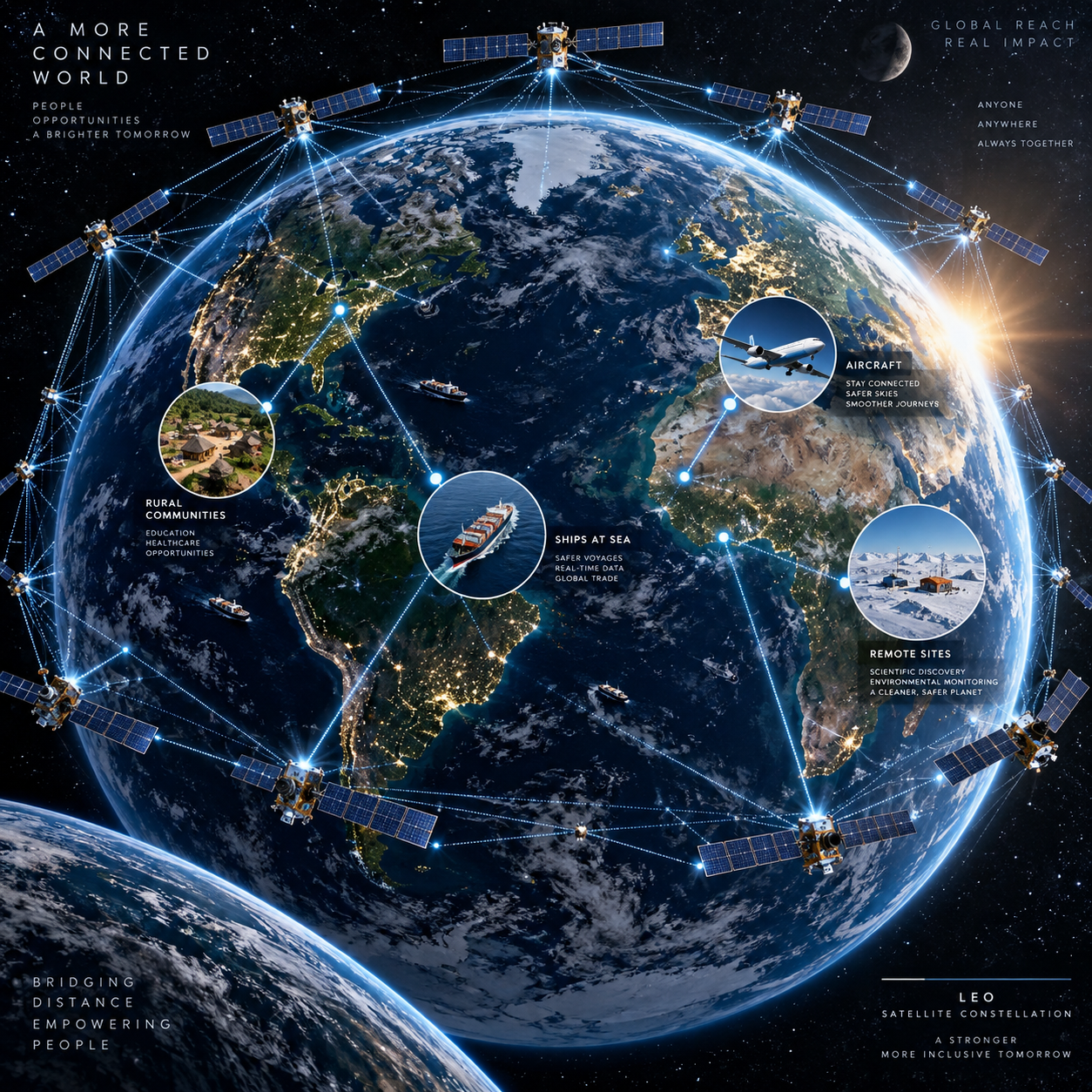
Low Earth Orbit (LEO) satellites are reshaping satellite communications by bringing internet infrastructure closer to the people and organizations it serves. Large LEO satellite constellations can support broadband access in places where fiber, cable, or terrestrial cellular networks are difficult or uneconomical to deploy.
The technology offers a valuable combination of low-latency connectivity, wide geographic reach, and flexible deployment. It is not a universal replacement for fiber, mobile networks, or traditional VSAT services, however. Performance depends on constellation design, ground infrastructure, spectrum availability, terminal placement, regulation, and local network demand.
What Are LEO Satellites?
Low Earth Orbit satellites are spacecraft operating relatively close to Earth, typically below 2,000 kilometers above the surface. Their shorter distance reduces signal travel time and allows satellite networks to provide more responsive internet access than many traditional geostationary systems.
Because a LEO satellite moves quickly across the sky, one spacecraft cannot continuously serve a fixed location. A network therefore requires many satellites working together as a LEO satellite constellation. As one satellite moves beyond the user terminal's view, another takes over the connection.
This handoff resembles the way a mobile phone moves between terrestrial cell towers, although the network operates across orbital paths. The result can be broad coverage over rural regions, oceans, aircraft routes, and remote industrial sites. Coverage is not automatically global: operators must deploy sufficient satellites, gateway capacity, regulatory authorization, and user equipment in each target market.
LEO systems also differ in their network architecture. Some route traffic from the satellite to a nearby ground station, while others use inter-satellite links to move data between spacecraft before sending it to an appropriate gateway.
How LEO Satellite Internet Works
LEO satellite internet connects a user terminal to an orbiting satellite, then routes traffic through ground stations or inter-satellite links into the wider broadband network. The process takes place continuously as satellites move overhead and the network manages tracking, handoffs, and routing.
A typical connection includes four core components:
- User terminal: A compact electronically steered or mechanically assisted antenna communicates with passing LEO satellites. It may be installed at a home, business, ship, aircraft, vehicle, or remote facility.
- LEO satellite: The spacecraft receives and transmits radio signals, providing the access link between the terminal and the wider network.
- Ground station: Also called a gateway, this facility links the satellite network to fiber backbones, internet exchange points, cloud platforms, and carrier infrastructure.
- Network management platform: Software controls authentication, beam allocation, satellite handoffs, routing, congestion management, and service quality.
In a conventional architecture, the satellite sends traffic down to a ground station within reach. Inter-satellite links can add another routing option, allowing data to travel across the constellation when a nearby gateway is unavailable or when the system is designed to optimize the path.
Installation still matters. A terminal generally needs a clear view of the sky, stable power, suitable mounting, and protection from physical obstruction. Trees, buildings, heavy precipitation, and poor cable installation can reduce reliability even when the satellite constellation itself has adequate coverage.
For larger organizations, LEO connectivity may connect to a software-defined wide area network, firewall, private cloud, or existing VSAT services. This makes the satellite link one component of a broader hybrid broadband network rather than an isolated replacement for terrestrial infrastructure.
Why LEO Satellites Are Changing Internet Access
LEO satellites are changing internet access because their lower altitude can reduce latency and extend broadband reach beyond the limits of terrestrial networks. They are especially useful where installing fiber or cellular infrastructure would take years or require prohibitive construction costs.
Latency is the most visible advantage. A signal traveling to a LEO satellite covers a much shorter distance than one traveling to a geostationary satellite thousands of kilometers above Earth. Lower propagation delay improves interactive applications such as cloud software, voice calls, video conferencing, remote monitoring, and some real-time business tools.
That advantage has limits. Total latency includes the satellite path, gateway distance, routing decisions, terrestrial backhaul, processing, and congestion. A poorly located ground station or overloaded beam can reduce the practical benefit of a low orbit. LEO means a shorter space path; it does not guarantee identical performance at every location or time.
LEO systems can also expand connectivity options for:
- Rural communities beyond the reach of fiber and cable;
- Remote schools, clinics, farms, mines, and energy facilities;
- Maritime vessels operating far from coastal networks;
- Aircraft requiring passenger or operational connectivity;
- Emergency-response teams working after terrestrial infrastructure fails.
Capacity planning is another important factor. A large constellation can reuse spectrum across many beams and distribute traffic across numerous satellites. Yet user demand also grows quickly. In densely populated areas, available capacity, local backhaul, and network policies may matter more than orbital altitude.
LEO vs. GEO Satellite Internet
The main difference between LEO and GEO satellite internet is orbital distance: LEO satellites operate much closer to Earth, while GEO satellites remain about 35,786 kilometers above the equator. LEO typically offers lower latency, whereas GEO systems can provide broad, stable coverage with fewer satellites.
| Factor | LEO satellite internet | GEO satellite internet |
|---|---|---|
| Orbit | Below 2,000 km, generally in moving orbital planes | Approximately 35,786 km above the equator |
| Latency | Usually lower, depending on routing and congestion | Higher because of the longer signal path |
| Constellation | Requires many satellites and coordinated handoffs | Can cover large regions with relatively few satellites |
| Terminal behavior | Must track moving satellites and manage handoffs | Usually points toward a fixed position in the sky |
| Coverage pattern | Flexible, but dependent on constellation and gateways | Broad regional coverage, with weaker performance at extreme latitudes |
| Common strengths | Interactive broadband and mobility | Broadcasting, established VSAT services, and wide-area coverage |
GEO remains valuable for applications that prioritize predictable regional coverage, mature service models, or point-to-multipoint distribution. GEO VSAT services are widely used for enterprise sites, banking networks, broadcast contribution, government communications, and backup connectivity.
LEO can be a stronger choice when responsiveness, mobility, or access to distant locations matters. The trade-off is greater dependence on a large constellation, sophisticated terminals, and an operator's ground network. Many organizations will use both technologies, selecting each link according to the application's latency, availability, coverage, and budget requirements.
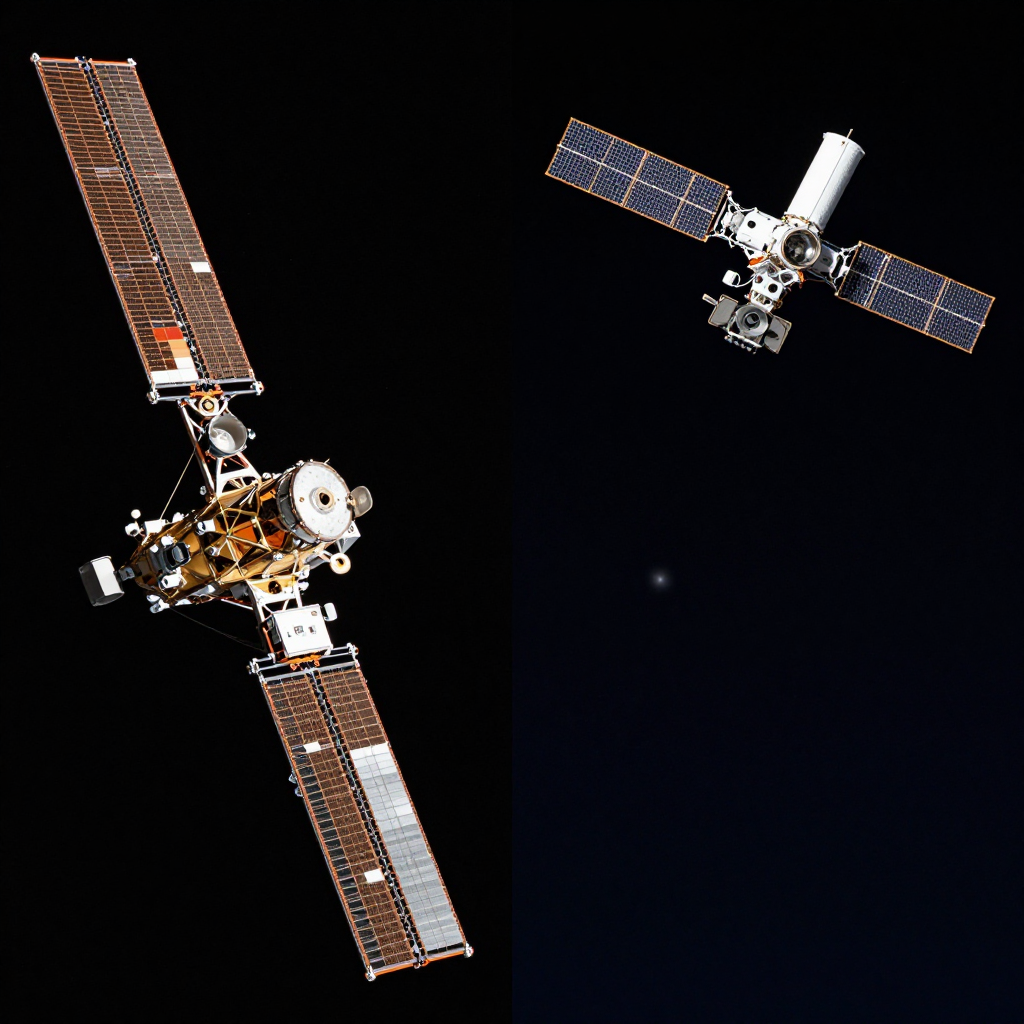
Key Applications Across Industries and Locations
LEO satellite connectivity supports rural broadband, enterprise networking, maritime and aviation communications, emergency response, and remote operations. Its value is highest when terrestrial infrastructure is unavailable, unreliable, or too expensive to extend.
Rural and remote connectivity
LEO can connect homes, schools, healthcare facilities, farms, and local businesses beyond the practical reach of fiber or mobile broadband. It can also serve as a temporary bridge while terrestrial broadband infrastructure is being constructed. Local regulations, terminal supply, installation conditions, and service capacity still determine the quality of the result.
Enterprise and industrial networks
Businesses can use LEO as primary access for isolated sites or as a resilient backup for fiber and cellular connections. Mining operations, construction projects, renewable-energy installations, pipelines, and scientific stations often need connectivity before permanent network infrastructure exists.
Maritime and aviation connectivity
Ships and aircraft benefit from a link that travels with them. LEO may support crew welfare, passenger internet access, logistics, fleet management, telemetry, and operational communications. Antenna certification, sky visibility, roaming policy, installation weight, and regulatory approvals are central design considerations.
Emergency communications
After floods, earthquakes, storms, or wildfires, terrestrial networks may lose power or backhaul. Portable LEO terminals can provide rapidly deployable connectivity for emergency teams, provided operators have spectrum authorization, power supplies, clear sky access, and sufficient network capacity.
Challenges and Deployment Considerations
LEO deployment requires careful planning because equipment, coverage, weather, congestion, regulation, and ground infrastructure all affect real-world performance. A satellite link should be evaluated as an engineered service, not selected solely because it uses a low orbit.
- Equipment and installation: Terminals, mounts, power systems, network appliances, professional installation, and ongoing support add to the total cost. Remote sites may require batteries, generators, or solar power.
- Availability and coverage: A provider may offer service in one country or latitude while lacking authorization, capacity, or gateway access elsewhere. Confirm the exact service address and mobility requirements.
- Weather effects: Heavy rain, wet snow, ice, and atmospheric conditions can weaken radio signals. Link budgets, antenna design, adaptive coding, and backup paths help manage weather-related outages.
- Congestion: Shared satellite capacity can vary by location and time. Ask about service policies, committed information rates, traffic prioritization, and peak-hour performance where business continuity matters.
- Regulatory compliance: National authorities may control spectrum use, terminal imports, licensing, lawful-intercept obligations, and cross-border operation. Maritime and aviation services often face additional requirements.
- Ground infrastructure: Gateways, fiber backhaul, data centers, network operations centers, and power systems remain essential. A constellation cannot deliver consistent internet access without a resilient terrestrial layer.
A practical evaluation framework is the R-C-A test: review Reach at the exact site, confirm Capacity during busy periods, and verify Availability against the organization's uptime target. This prevents a common mistake: treating a coverage map as a guarantee of business-grade service.
The Role of LEO in the Future of Satellite Communications
LEO will likely complement fiber, cellular networks, GEO satellites, and VSAT services rather than replace them all. Its strongest role is to provide flexible, low-latency access where terrestrial networks are absent or where a second path improves resilience.
Future satellite communications deployments will increasingly use hybrid architectures. A remote branch might use fiber as its primary connection, cellular as a secondary path, and LEO or GEO VSAT as backup. A ship may combine LEO broadband with GEO coverage and coastal cellular service. An enterprise can steer traffic through the link that best matches latency, cost, availability, and application priority.
Decision-makers should compare providers and technologies using measurable requirements:
- Required throughput and peak-hour capacity;
- Acceptable latency and jitter for business applications;
- Uptime targets and backup-link expectations;
- Terminal power, mounting, and maintenance needs;
- Coverage, mobility, licensing, and service-level terms;
- Integration with firewalls, SD-WAN, cloud services, and existing VSAT infrastructure.
LEO satellites are therefore best understood as a new layer in the broadband network. They make global connectivity more adaptable, but successful deployments still depend on sound engineering, realistic service expectations, and resilient ground infrastructure.
Frequently Asked Questions About LEO Satellite Internet
What is a LEO satellite?
A LEO satellite is a communications satellite operating in Low Earth Orbit, generally below 2,000 kilometers above Earth. Because it is closer to the surface than a GEO satellite, it can support lower signal latency.
How does LEO satellite internet differ from GEO satellite internet?
LEO satellite internet uses many moving satellites closer to Earth and typically provides lower latency. GEO internet uses satellites fixed relative to the ground at a much higher altitude, offering broad coverage with simpler fixed-pointing terminals but greater signal delay.
Why does LEO satellite internet have lower latency?
LEO internet has lower propagation latency because data travels a shorter distance between the user terminal, satellite, and ground network. Routing, gateway location, congestion, and processing still influence the final measured latency.
Can LEO satellites provide internet in rural or remote areas?
Yes. LEO constellations can serve many rural and remote locations beyond the reach of fiber, cable, or cellular networks. The site still needs an approved service, suitable equipment, power, sky visibility, and adequate local network capacity.
What equipment is needed for LEO satellite connectivity?
Most deployments require a LEO user terminal, mounting hardware, power, indoor networking equipment, and an active service plan. Enterprise, maritime, and aviation installations may also need managed routers, redundant power, tracking systems, professional installation, and integration with existing VSAT or SD-WAN infrastructure.