How VSAT Services Support Remote and Rural Communities
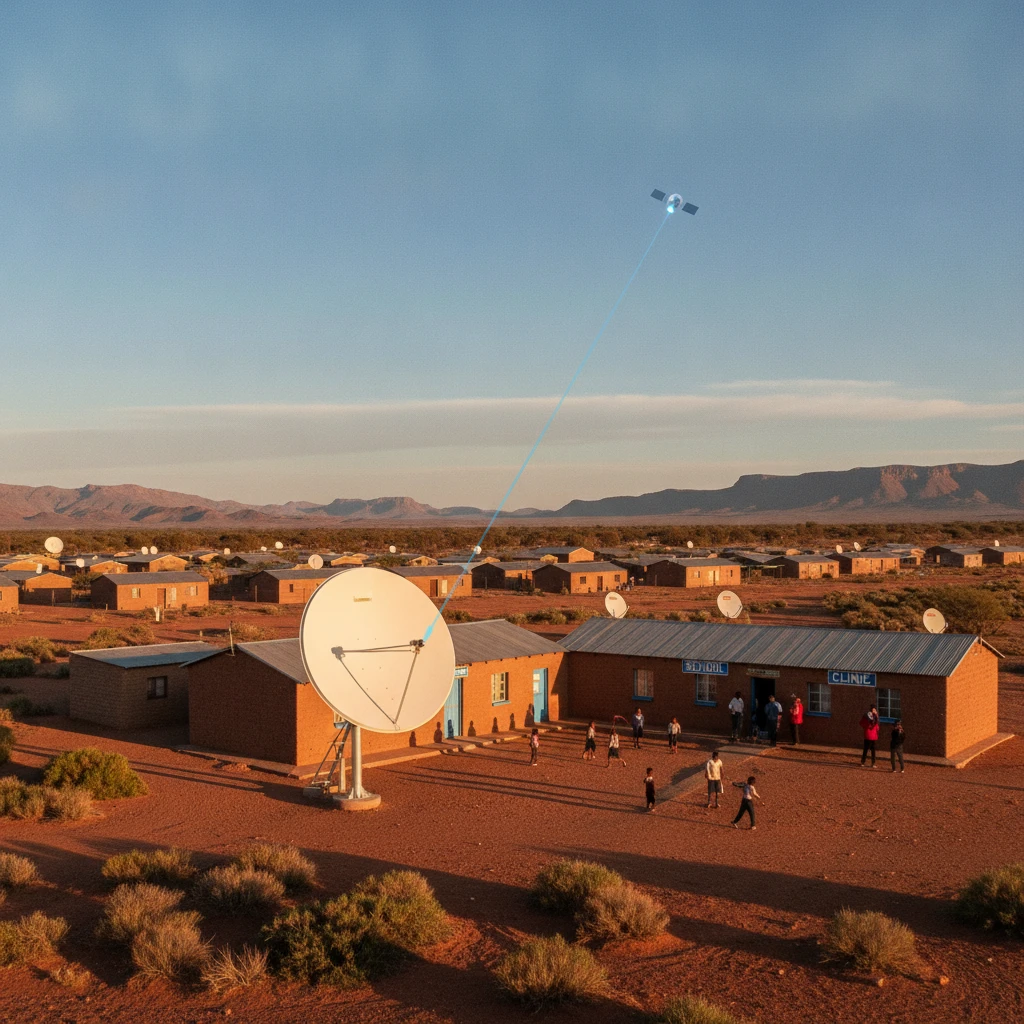
Reliable internet can be difficult to provide in remote and rural areas where homes and services are spread across large distances. VSAT services offer one way to bridge that gap: a small satellite terminal can connect a site to the wider internet without relying on a nearby fiber or cable network.
VSAT is not a universal fix. Coverage, capacity, equipment, power, weather, and cost all affect whether a satellite connection suits a particular community. Understanding how the service works and what local users need helps communities weigh it against other connectivity options.
Why rural and remote areas need alternative connectivity
Remote and rural areas often need alternatives because terrestrial broadband can be costly or impractical to extend across long distances. Satellite connectivity can serve locations where fiber, cable, or mobile networks do not reach, though local availability must be confirmed.
Building a terrestrial network means installing infrastructure such as fiber-optic cables, towers, or wireless links. In sparsely populated regions, providers may face difficult terrain, long routes, limited road access, or too few customers to support the investment. Islands, mountain settlements, farms, and isolated public facilities can be especially challenging to connect.
That gap affects more than household browsing. A school may need online learning resources, while a clinic may rely on digital records or remote consultations. Local businesses and public agencies also need dependable ways to communicate, access cloud services, and coordinate work.
Remote and rural connectivity is a local infrastructure problem, so one technology rarely fits every location. Fixed wireless, mobile service, community networks, and fiber may work where infrastructure exists or can be expanded. VSAT becomes worth evaluating when terrestrial options are unavailable, too slow to arrive, or difficult to deploy economically.
How VSAT services deliver connectivity
VSAT services connect a user’s site to the internet through a small satellite terminal, a satellite, and a ground network operated by a service provider. The terminal’s satellite dish sends and receives radio signals, while a modem connects that link to local devices or a site network.
In a typical setup, a computer or Wi-Fi router sends data through the modem to the satellite dish. The dish transmits the signal to a satellite, which relays it to a ground station connected to the internet. Incoming data follows the reverse path. This makes satellite internet useful where a direct terrestrial link is missing, but it still depends on a provider’s satellite capacity and ground infrastructure.
Two common satellite orbits affect the connection. Geostationary satellites stay above a fixed point on Earth and can cover broad regions, but the long signal path can create noticeable network latency. Low Earth orbit (LEO) satellites operate much closer to Earth, generally reducing the signal’s travel time; however, service depends on the provider’s constellation, coverage, capacity, and equipment.
VSAT can also provide backhaul connectivity. In that role, one satellite link supplies internet to a local Wi-Fi network, cellular site, school campus, or community hub. The local network then shares that connection among users. The available bandwidth is shared too, so capacity planning matters when many people go online at once.
Where communities use VSAT connectivity
Communities use VSAT connectivity to bring internet access to essential services and local organizations that lack a practical terrestrial connection. Schools, clinics, businesses, and public agencies can use the link for everyday digital tasks, subject to its capacity and performance.
- Schools and distance learning: Teachers and students can access digital course materials, learning platforms, and communication tools. A school can also share the link through a campus network, but administrators should plan for busy periods when many students connect simultaneously.
- Clinics and telemedicine: Health facilities may use internet access for digital records, consultations with off-site clinicians, and administrative systems. Video consultations need suitable upload and download capacity, as well as a connection stable enough for the service being used.
- Local businesses: Farms, shops, tourism operators, and other rural businesses can use online payments, inventory tools, email, and cloud software. The right service depends on how many people and devices need access and how much data their work requires.
- Community and public services: Libraries, local government offices, emergency services, and community centers can use satellite backhaul to provide connectivity at a central site or support communications in underserved areas.
In practice, a community hub may be more useful than installing separate terminals for every household. One VSAT link can support a shared space, though that arrangement requires a local network, clear access rules, and enough capacity for the expected users.
Benefits for community access and resilience
VSAT can extend internet access to locations beyond the reach of terrestrial broadband and can provide an additional communications path when ground networks are unavailable or disrupted. Its value depends on the service’s coverage, capacity, installation, and local backup arrangements.
A satellite link can be deployed without building a long cable route to the site, which may make it a practical option for isolated facilities. It can support distance learning, telemedicine, business operations, and access to public information from a shared connection. Satellite backhaul can also help connect a local network or facility to services beyond the community.
Satellite connectivity may add resilience when a terrestrial route is damaged, but it should not be treated as automatically independent or guaranteed. The VSAT terminal needs power, a clear path to the satellite, working equipment, and an available service. For critical communications, organizations should ask the provider about redundancy and plan for power interruptions, equipment faults, and service outages.
The core advantage is reach; the trade-off is that a satellite connection has distinct operating conditions. It may not match fiber’s capacity or latency, and service quality varies by network and plan. Communities should define the task first, then choose the connection that can support it.
Limitations and planning considerations
VSAT performance depends on satellite network design, service capacity, equipment, weather, and the installation site. Before choosing a service, assess latency, line of sight, power, availability, equipment, and total cost against the community’s actual needs.
- Latency: Signals traveling to and from a satellite take time, especially with geostationary systems. Many everyday tasks can still work, but real-time applications such as interactive voice or gaming may feel less responsive. Ask providers about typical latency for the specific service and satellite network.
- Weather and line of sight: Heavy rain or other severe weather can affect some satellite links. Trees, buildings, terrain, or later construction may obstruct the dish’s view of the satellite. A professional site survey can identify likely obstructions before installation.
- Power and infrastructure: The dish and modem need electricity, and the site needs suitable mounting, cabling, and an internal network. In areas with unreliable power, include backup power in the plan and account for the added equipment and maintenance.
- Capacity and cost: Service plans differ in data allowances, speeds, contention, equipment charges, and support. A connection that works for a small office may become congested when shared by an entire school or community center. Compare the complete cost of equipment, installation, service, and upkeep.
- Availability: Satellite coverage is not identical across providers or networks. Confirm that service is available at the exact site and check any restrictions, capacity limits, or installation requirements before making plans.
A common planning mistake is selecting a plan based only on advertised speed. Speed does not show how many users can share the connection comfortably, how latency affects applications, or what happens when usage peaks. List the main tasks, estimate simultaneous users, and ask providers how the proposed service handles those demands.
Choosing a VSAT solution for a community
Choose a VSAT solution by matching verified site availability and network capacity to the community’s applications, user count, budget, and support needs. Compare satellite service with terrestrial alternatives where they exist, rather than assuming one technology is best for every location.
A practical assessment can follow five steps:
- Define the purpose: Identify whether the connection will support a school, clinic, business, public Wi-Fi point, or backhaul link. Note which applications are essential and whether they need real-time communication.
- Estimate demand: Count likely users and devices, identify peak-use periods, and consider video, file transfers, and cloud applications. Ask the provider about capacity and any data or usage policies.
- Verify the site: Confirm coverage and service availability at the exact location. Check dish placement, line of sight, mounting, cable routes, and power before committing to installation.
- Compare full costs and support: Review equipment, installation, recurring charges, repairs, and technical support. For a shared community connection, decide who will manage the network and help users when problems arise.
- Compare alternatives and plan for failure: Check whether fiber, fixed wireless, mobile broadband, or a hybrid connection could meet the same need. For essential services, agree on backup power and a response plan for outages.
The right choice may be a VSAT link, another access technology, or a combination. For example, satellite backhaul can connect a remote community hub while local Wi-Fi distributes access nearby. That setup can extend reach, but it needs enough capacity, responsible network management, and ongoing funding.
Frequently asked questions
These answers summarize what communities should know about VSAT services, satellite internet, and common uses. Confirm technical and service details with the provider serving the location.
What does VSAT stand for?
VSAT stands for Very Small Aperture Terminal. It refers to a small satellite communication terminal, typically including a dish and modem, used to send and receive data through a satellite network.
Can VSAT provide internet in areas without wired broadband?
Yes. VSAT satellite internet can connect a site that lacks wired broadband, provided the location is within a provider’s service area and has suitable installation conditions. Coverage, capacity, and plan terms vary, so availability must be checked locally.
What affects VSAT connection performance?
Performance depends on the satellite network and orbit, available capacity, latency, weather, line of sight, equipment, power, and how many users share the link. The application matters too: email may tolerate latency better than a live interactive call.
Is VSAT suitable for schools and healthcare facilities?
It can be suitable when a school or healthcare facility lacks a better connection and the service can support its applications and user load. Check bandwidth, latency, reliability, power backup, support, privacy, and continuity requirements before relying on VSAT for essential services.